Showing posts with label bio. Show all posts

Saturday, February 1, 2020

Ankara Natural History Museum

On a recent trip to Anakara, we visited the Natural History Museum (MTA Genel Müdürlüğü Tabiat Tarihi Müzesi).

We were greeted by dinosaurs at the entrance

Guarding an egg or playing ball?
Inside are plenty of fossils, models and taxidermy exhibits of all sorts of creatures
Pseudofusulina fossil, a type of marine creature


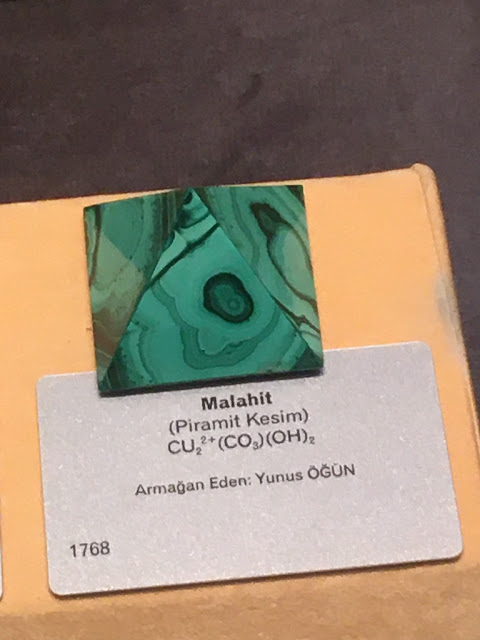
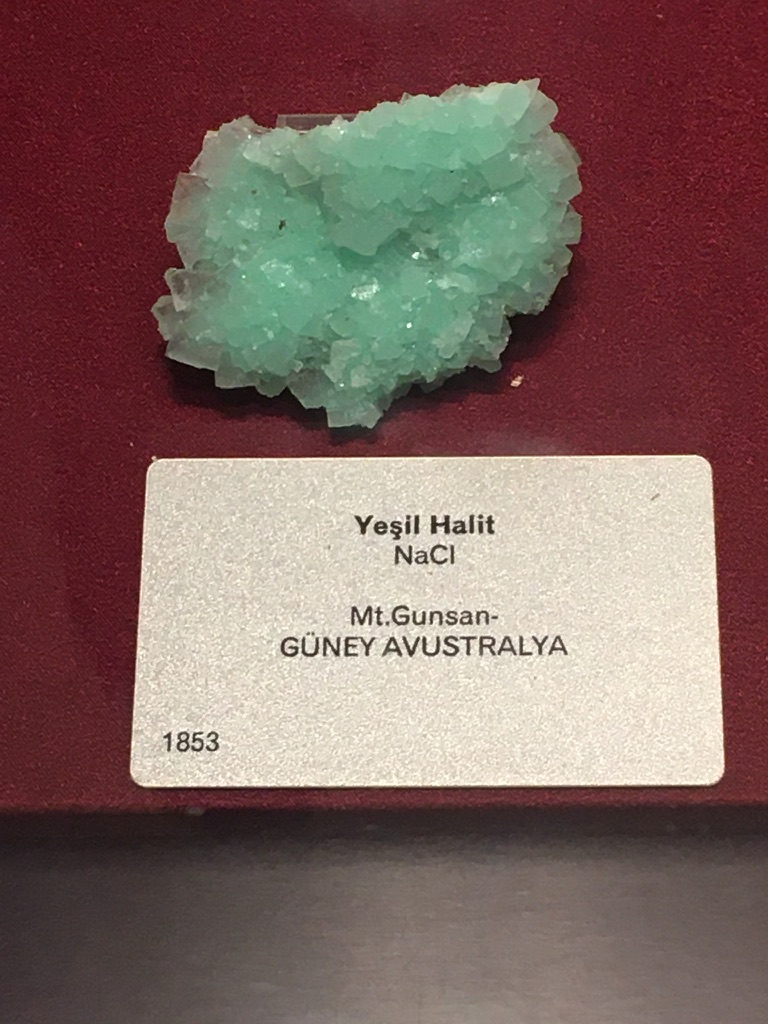
Also a large collection of different rocks and minerals
Purple Jade

Tuesday, April 23, 2019

The Museum of Alchemists and Magicians of Old Prague

During the 1500s, the idea of turning lead into gold with alchemy was sought after by many including Emporer Rupert II of Bohemia. He employed Edward Kelley as an alchemist. We visited the historic tower where Kelley produced gold from a red liquid and mercury. It is suspected that some fakery was involved, but it would be interesting to learn if any real science was done or discovered by the alchemists.

Kelley Tower, 1546

View from the tower
Some of the preserved creatures in the lab

A homunculus

Kelley's study

More lab equipment

Thursday, April 26, 2018

Future-proofing a pine seedling nursery through automation

MuzGadget cousin, Patrick, is featured in this Rural Delivery clip and talks about how he is using technology to automate, sustain and improve his pine seedling nursery.


Read the whole Rural Delivery story at https://www.ruraldelivery.net.nz/stories/Murray-s-Nurseries

Monday, April 2, 2018

Center of Scientific Wonders, Budapest

Last Monday, we spent the day at the Center of Scientific Wonders in Budapest. We enjoyed a wide range of interactive science exhibits, the games and puzzles bar and an escape room. The space exhibit had a series of puzzles and challenges to complete. The cafe tables had multi-player games and puzzles embedded in them. We escaped from the Globetrotter room in about half of the 40 minutes time limit after solving geography puzzles to open locks and get more keys and clues. It was a lot of fun.

I built a leaning tower.

We looked at polarization. 

And ferrofluid.


And played with magnets.


A water vortex.

For more info visit the Center of Scientific Wonders' website: https://www.csopa.hu/en/


Wednesday, August 19, 2015

Natural History Museum, Stuttgart

We visited the  Stuttgart State Museum of Natural History in Stuttgart during our summer holiday.

The museum has two exhibition buildings in Rosenstein park. We only visited the Museum am Löwentor, which contained items from prehistoric times including amber complete with captured insects (like in Jurassic Park) and fossils and reconstructions of cave bears, dinosaurs, mammoths, people and other land and sea creatures.


Friday, September 6, 2013

Using destructive lasers to make beautiful art


Artist, Bathsheba Grossman is making some amazing works with 3D printing and laser etching.

Using custom software and high frequency lasers, she creates beautiful crystal paperweights and keyrings displaying data with models of galaxies, molecules and biology, physics and mathematical structures inside.

Globular Cluster
Illuminated DNA Keychain
Her 3D printed metal sculptures and jewelry are fascinating too.

Quintrino

Hypercube Pendant (Gold plate finish)
Discover more in Bathsheba's shop and gallery on her website. She explains the process of making the laser etched crystals and how the 3D printed sculptures are made and even has some downloadable objects you can 3D print yourself.

Monday, August 5, 2013

Best science museum visit yet: Cité des Sciences et de l’Industrie, Paris

In July we spent 10 nights in Paris and visited many of the touristic sites as well as sites that our science loving kids would enjoy. The Cité des Sciences et de l’Industrie (City of Science and Industry) was so amazing and so big that we spent two full days there.

Full of interactive exhibits on: Mathematics, Sounds, Space Travel, Communication, Genetics, Light, Images, Energy, Design and Innovation, Transportation, the Universe as well as temporary exhibits: Economics, Futurotextiles, Housing for tomorrow, and Leonaro da Vinci's projects, designs and machines; the Cité des Sciences is the largest science museum in Europe and France's fifth most popular museum.

All of the exhibits were top quality. Almost all were in multiple languages (including Braille). The depth of science was amazing - nothing was dumbed down and with so many exhibits there was something for everyone. I was impressed by the use of four synchronized projectors on a hanging sphere in an Earthwatch: the satellite revolution exhibit that gave a realistic impression of the revolving and changing world while the story of the exhibit was being told.

Our children enjoyed the 5-12 years activity area which featured a TV studio, an ant colony, communication, fun with water and a factory - they produced their own robot cut personalized cardboard boxes.

Outside, we visited the Argonaute submarine that hunted submarines in the 1950s and watched a 3D movie about dragons at the Geode hemispherical cinema.

Futurotextiles was closed and being packed up on our second visit. We didn't have time to see the Multimedia Library or the Planetarium and the Aquarium was under renovation. Perhaps next time!
Tuesday, March 12, 2013

Good bugs

The first computer bug was a moth trapped in a relay. In this video, Snapdragon harnesses the energy of some bugs to power something useful.


Spotted by MuzGadgets Bro Nigel.

Sunday, November 4, 2012

Solve Puzzles for Science

Protein structure prediction is one of the hardest problems in biology today. If we can predict how the amino acids in proteins fold to form their structure, we can then use that information to design drugs to target diseases or design new proteins that help prevent or treat diseases like HIV, Cancer and Alzheimer's.

Foldit is a computer game that uses our pattern recognition skills and puzzle solving abilities to fold proteins and use these for training the artificial intelligence programs.


Monday, June 18, 2012

We are all related/connected

Next week I will be in New Zealand catching up with relatives I haven't seen for four years (and some I have not met yet).

Here is an interesting video explaining how we are all related.


We are all connected.

Wednesday, February 22, 2012

Solar panels from grass clippings

Plants naturally convert solar energy and now scientists at MIT have found a way to extract the molecules responsible for photosynthesis and use them with a stabilizer to keep them "alive" and harvest electricity.
This video describes how the process could be used to provide very low cost energy to remote and developing places.


As seen on Inhabitat via DesignTaxi.

Wednesday, May 4, 2011

Growing nanotechnology like nature does

In this TED talk, Angela Belcher describes programming bacteria and viruses to grow batteries, solar cells and other nano technology at room temperature and pressure. Emulating the way abalone and other animals create shells using calcium, carbonate and proteins, the different virus-infected bacteria can produce nano structures and join them together.


This talk reminds me of this part in the Life, The Universe and Everything:The Cosmic Conclusion to The Hitchhikers Guide to the Galaxy by Douglas Adams:

It was a large mattress, and probably one of quite high quality. Very few things actually get manufactured these days, because in an infinitely large Universe such as, for instance, the one in which we live, most things one could possibly imagine, and a lot of things one would rather not, grow somewhere. A forest was discovered recently in which most of the trees grew ratchet screwdrivers as fruit. The life cycle of ratchet screwdriver fruit it quite interesting. Once picked it needs a dark dusty drawer in which it can lie undisturbed for years. Then one night it suddenly hatches, discards its outer skin which crumbles into dust, and emerges as a totally unidentifiable little metal object with flanges at both ends and a sort of ridge and a sort of hole for a screw. This, when found, will get thrown away. No one knows what it is supposed to gain from this. Nature, in her infinite wisdom, is presumably working on it.
No one really knows what mattresses are meant to gain from their lives either. They are large, friendly, pocket-sprung creatures which live quiet private lives in the marshes of Squornshellous Zeta. Many of them get caught, slaughtered, dried out, shipped out and slept on. None of them seem to mind and all of them are called Zem. 

Wednesday, December 8, 2010

HeroRat

An amazing project that uses the incredible sense of smell that rats have for mine and tuberculosis detection.


Learn more about the awesome sniffer rats at HeroRat.

Thursday, May 13, 2010

Print a brick

Ginger Krieg Dosier from the American University of Sharjah (UAE) has invented a method of producing printable, bio-manufactured bricks.

Printing layers of sand, bacteria (Sporosarcina pasteurii), yeast extract, urea, calcium chloride and water starts a biological process where the bacteria produce a glue that binds the materials together. Printable bricks can be almost any shape and are as strong as marble.

A neat feature is that the same bio process can be used to bind bricks together doing away with the need for traditional mortar.

More details on Metropolis Magazine.

As seen on Printable Brick Could Cut World's Carbon Emissions by "At Least" 800 Million Tons a Year | Fast Company