Showing posts with label medicine. Show all posts

Saturday, January 4, 2020

METU (ODTÜ) Science and Technology Museum, Ankara

On a recent trip to Ankara, Turkey, we visited the Middle East Technical University (Orta Doğu Teknik Üniversitesi) Science and Technology Museum.

This museum is located on the university campus and the security guard was kind of confused as to why we were visiting. 

Steam Engine

Outside is a steam engine and several aircraft and several buildings that appear to be cover-ups for alien landings. The large saucer-shaped building is entered via an automatic door that makes a wooshing sound when opening.
Satellite map view courtesy Apple Maps.

The same satellite map via Google. What are they hiding?


Inside are two floors of exhibits of science and technology from prehistoric to modern times.
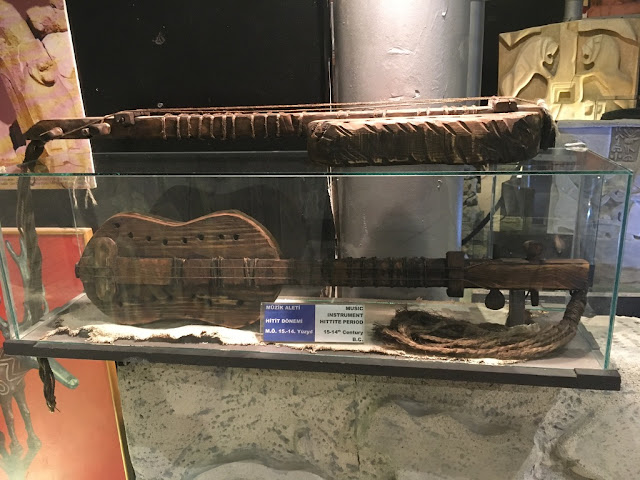
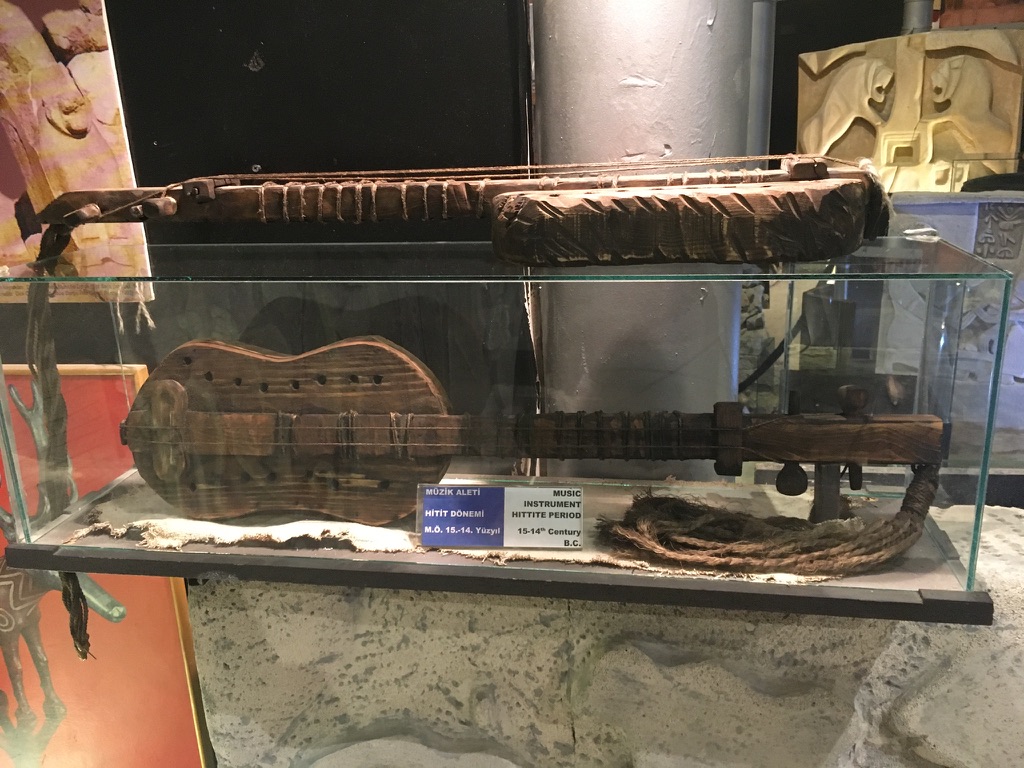
Hittite era guitar

With Gallipoli located in Turkey, there were items from World War I, including a medical tent and devices for carrying the wounded soldiers.

Army hospital tent from 1914-1922
The system to carry a wounded soldier on a horse
The system to carry wounded soldiers on a donkey
There were several variations of typewriters. 
QWERTZ (German/Polish) keyboard
AZERTY, (French/Belgium) keyboard
Turkish-F keyboard


Video cameras
Helicopter
I think my parents had a cassette deck and headphones similar to this in the 1970s.
Tape deck, headphones, cassette player
Home movie cameras
Movie projector
Oric Atmos Computer made by Tangerine Computer Systems
In another building are vehicles - mostly cars.

Yellow Desoto
Yellow Pontiac
Yellow and Black Chevrolet
Anadol Böcek, (Anatolian Bug), a Turkish made car from 1975

Monday, February 24, 2014

Rebooting Medical Testing

When I worked as the computer systems administrator at Medical Diagnostics, a community medical testing lab (from 1988-94), occasionally I would give a tube of blood for control tests. The experience involved the phlebotomists putting a tourniquet on my arm, finding a vein, inserting a needle and releasing the tourniquet so the blood would fill a vacuolated tube. The analysis machines at the time could sometimes do multiple tests on the same sample, but often patients had blood drawn into different tubes for haematology, biochemistry and serology.

In 2003, Elizabeth Holmes, at the age of 19 dropped out of Stanford University and invented a way to run 30 lab tests on a single drop of blood.

Elizabeth Holmes, founder of Theranos 
Collecting just a pin-prick of blood, Theranos' Nanotainer reduces the blood required for testing to about 1/1000 of the size of traditional phlebotomy.

Other innovations from Theranos include improving the test and assays for faster results. Instead of growing cultures which takes days, they measure the DNA of pathogens. And by automating the processes as much as possible, they can offer much lower and transparent pricing, with the potential of saving billions of dollars in the US health system.

Read more at Wired: http://www.wired.com/wiredscience/2014/02/elizabeth-holmes-theranos/
And Theranos: http://www.theranos.com/

Monday, August 5, 2013

Best science museum visit yet: Cité des Sciences et de l’Industrie, Paris

In July we spent 10 nights in Paris and visited many of the touristic sites as well as sites that our science loving kids would enjoy. The Cité des Sciences et de l’Industrie (City of Science and Industry) was so amazing and so big that we spent two full days there.

Full of interactive exhibits on: Mathematics, Sounds, Space Travel, Communication, Genetics, Light, Images, Energy, Design and Innovation, Transportation, the Universe as well as temporary exhibits: Economics, Futurotextiles, Housing for tomorrow, and Leonaro da Vinci's projects, designs and machines; the Cité des Sciences is the largest science museum in Europe and France's fifth most popular museum.

All of the exhibits were top quality. Almost all were in multiple languages (including Braille). The depth of science was amazing - nothing was dumbed down and with so many exhibits there was something for everyone. I was impressed by the use of four synchronized projectors on a hanging sphere in an Earthwatch: the satellite revolution exhibit that gave a realistic impression of the revolving and changing world while the story of the exhibit was being told.

Our children enjoyed the 5-12 years activity area which featured a TV studio, an ant colony, communication, fun with water and a factory - they produced their own robot cut personalized cardboard boxes.

Outside, we visited the Argonaute submarine that hunted submarines in the 1950s and watched a 3D movie about dragons at the Geode hemispherical cinema.

Futurotextiles was closed and being packed up on our second visit. We didn't have time to see the Multimedia Library or the Planetarium and the Aquarium was under renovation. Perhaps next time!
Saturday, July 6, 2013

Cortex: 3D printed exoskeleton to replace plaster and resin casts.

Victoria University (New Zealand) graduate Jake Evill has designed a revolutionary 3D printed injury-localized exoskeleton to help the healing of broken bones. Using x-rays and a hacked together 3D scanner the lightweight but strong cast is custom printed and snaps together to provide support for the fracture.

Images: Jake Evill


The Cortex cast is waterproof and has higher density printing to provide extra support where it is needed.

Jake is seeking partners to continue development of the technology. More info at http://jakevilldesign.dunked.com/cortex.

Wednesday, February 1, 2012

Sonication - healing with focused sound waves

Ultrasound for medical imaging has been used for a long time now, but focused ultrasound in conjunction with magnetic resonance imaging produces some amazing breakthroughs in non-invasive surgery.

Watch this inspiring Ted Talk from Yoav Medan.